

A pounding headache or a wobbly, off-balance feeling can throw off your whole day. Most people don’t connect that discomfort to their eyes, but tired, strained eyes can be part of the problem.
Yes, eye problems like digital eye strain, binocular vision trouble, and an outdated prescription can trigger headaches and dizziness. A thorough eye exam can help track down the source, and treating the underlying eye issue is often more straightforward than people expect.
How Your Eyes and Balance Work Together
Your sense of balance relies on 3 systems working together. Your inner ears track motion, your body senses where your limbs are, and your eyes send signals to your brain about the space around you.
When those signals line up, you feel steady. When they don’t, your brain gets confused, and that mismatch can trigger a headache or leave you feeling lightheaded.
Think about scrolling on your phone while walking. Your eyes are locked on something close, but your inner ear senses movement. That disagreement between the two is exactly the kind of mismatch that can leave you feeling off.
Common Eye Problems Linked to Headaches and Dizziness
A handful of eye issues tend to come up again and again in people dealing with these symptoms. Here’s what to look for.
Digital Eye Strain
Hours in front of a screen ask a lot from your eyes. Your focusing muscles lock onto one distance, and you blink less often, which leaves your eyes dry and tired.
That fatigue can build into a dull headache by mid-afternoon, and some people notice their vision blurs slightly when they finally look up from the screen. Small changes to your lighting and screen habits can ease a lot of that strain.
Binocular Vision Trouble
Your two eyes are supposed to work as a team, blending two images into one clear picture. When they struggle to line up, your brain works overtime to close the gap.
That extra effort can show up as double or blurry vision, headaches, and an off-balance feeling that’s hard to pin down.
An Outdated Prescription
An old prescription forces your eyes to work harder to focus. That ongoing strain can bring on headaches and a sense of disorientation, especially when you’re switching between near and far tasks.
Updating your glasses prescription can ease that strain and bring things back into focus.
Symptoms to Watch For
Some signs point toward your eyes more than you’d expect. Here’s what tends to show up:
- Headaches or migraines
- Dizziness or nausea
- Blurred or double vision
- Sensitivity to light
- Dry or sore eyes
A single symptom on its own might not mean much. A pattern that shows up again and again deserves a closer look.
How to Tell If Your Eyes Are the Cause
You can pick up on some of these patterns at home before you ever book an appointment.
Signs Pointing to Vision
Pay attention to timing. If your symptoms get worse after a long stretch at the computer or on your phone, your eyes are likely part of the story.
Headaches that ease once you rest your eyes or step away from the screen are another strong clue.
When an Eye Exam Helps
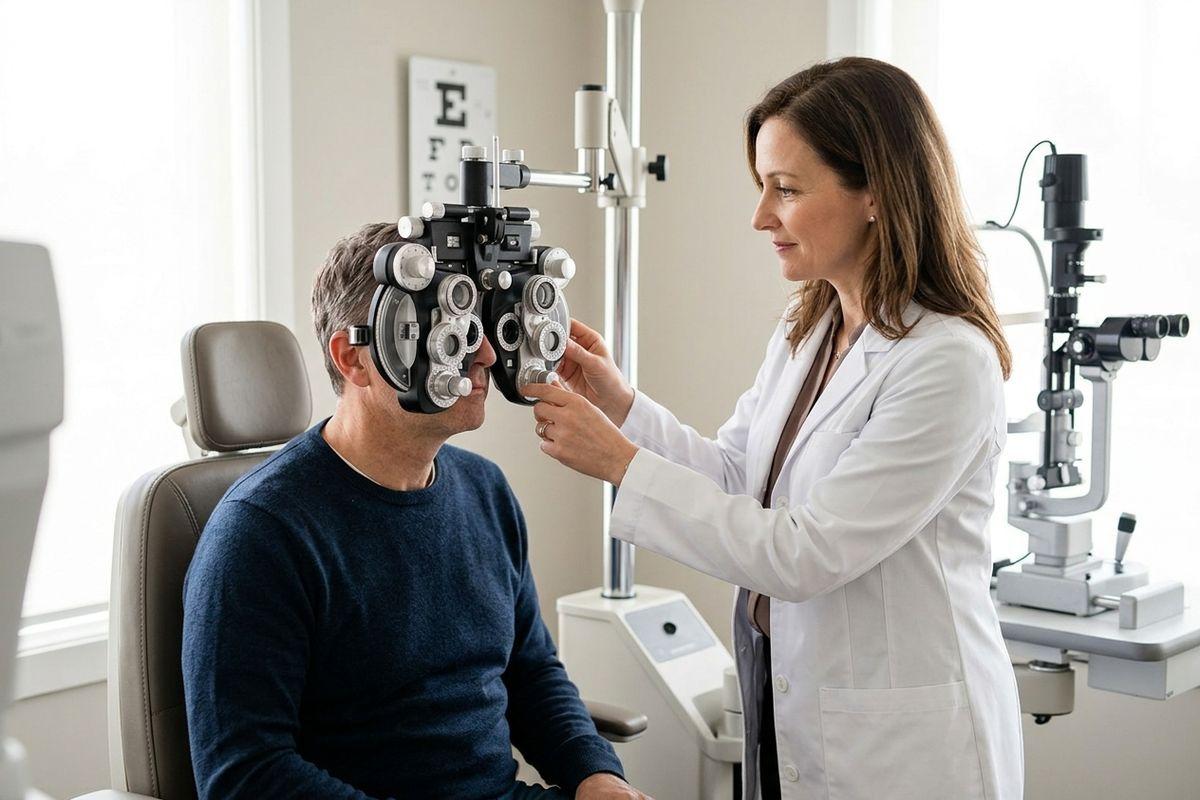
Home observations only tell you so much. An eye exam can pinpoint the cause and check how well your eyes focus and work together.
An exam does more than update your prescription, too. It can also screen for conditions like glaucoma that develop quietly over time, so you leave with a clear picture of what’s going on.
Your optometrist will also test how your eyes track and focus together, not just how sharp your vision is on a chart. That combination is often what reveals the real source of your headaches.
Ways to Find Relief and Protect Your Vision
Once you know your eyes are part of the picture, a few changes can make a real difference. Some you can start today, and others come with support from your optometrist.
Simple Daily Habits
Try the 20-20-20 rule. Every 20 minutes, look at something 20 feet away for 20 seconds.
This gives your focusing muscles a short break and can ease that end-of-day ache.
And your setup matters too. Soften harsh overhead lighting, cut down on screen glare, and bump up your text size so you’re not leaning in to read.
Support From Your Optometrist
When daily habits aren’t quite enough, your optometrist can dig deeper. Treatment for digital eye strain can address focusing trouble and dryness that keeps coming back.
The right lenses can help too. Contact lens fitting and specialty lenses can be matched to how your eyes work, so you feel comfortable through a full day.
Ready to Get to the Bottom of Your Headaches?
Headaches and dizziness can wear you down, and you don’t have to guess at what’s causing them. The team at Willoughby Doctors of Optometry can check how your eyes focus, team up, and handle daily screen time, then help you build a plan that fits your life. Book your eye exam today and take the first step toward clearer, more comfortable days.