Key Takeaways
- Allergies can irritate the eye’s surface and disrupt the tear film.
- Allergy symptoms and dry eye symptoms often overlap, making self-diagnosis tricky.
- Common allergy medications like oral antihistamines can make dry eye worse.
- Simple habits like closing your windows on high-pollen days can reduce allergen exposure.
- A comprehensive eye exam can identify what’s going on with your eyes.
Your eyes feel watery, scratchy, and like there’s sand stuck in them. You’re not sure if it’s allergies, dry eye, or whether it’s possible to have both at the same time. It’s a frustrating combination, and it’s more common than you might think, especially during spring and fall allergy seasons here in Langley. At Willoughby Doctors of Optometry, our team deals with this kind of overlap regularly, and the good news is that both conditions can be assessed and managed together with the right care.
Yes, allergies can contribute to dry eye, and the two conditions can occur together, each one making the other feel worse. A closer look at dry eye causes and treatment options can help you understand what might actually be going on beneath the surface.
The Link Between Allergies and Dry Eye
When your body reacts to an allergen, it triggers things like inflammation throughout your system, including in your eyes. That inflammation can disrupt the tear film, leaving your eyes dry and uncomfortable even when they’re watering.
Airborne allergens like pollen and dust also land directly on the surface of your eyes. This causes irritation on contact, separate from the internal response. So you may be dealing with two different sources of discomfort at once, which is why the symptoms can feel so relentless.
Common Signs and Symptoms
Signs Your Allergies Are Affecting Your Eyes
Allergy-related eye symptoms tend to have a few distinct features. If you notice any of these, your eyes are likely reacting to something in the environment around you:
- Intense itching that makes you want to rub your eyes
- Redness and puffy eyelids, especially in the morning
- Other allergy symptoms, like hives or a runny nose
How to Tell the Two Conditions Apart
The overlap between allergies and plain dry eye is where things get confusing. Here’s a general way to think about it.
Allergy-related eye problems usually come with intense itching and are often paired with a runny nose or sneezing. Regular dry eye, without the allergy component, tends to feel more like a burning, stinging, or scratchy sensation with little itching.
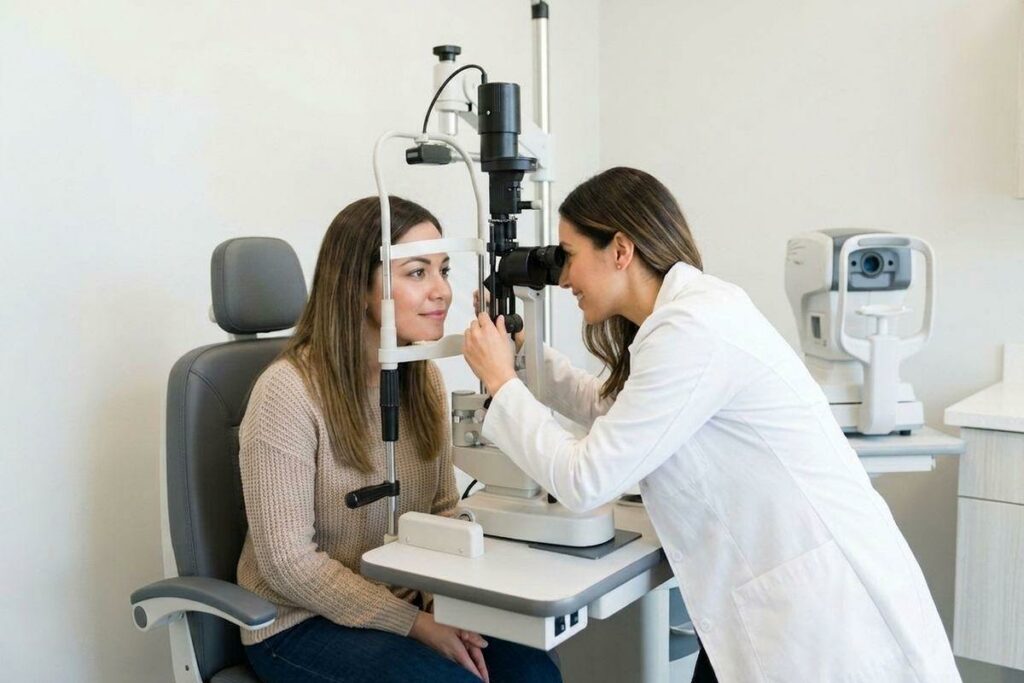
That said, the 2 conditions can show up together, and trying to figure out what you have on your own is genuinely difficult. That’s exactly where an eye exam comes in. Our team can assess your symptoms, listen to your concerns, and recommend a targeted treatment plan tailored to your specific case.
What Triggers Dry Eye During Allergy Season
Common Allergens
Several everyday allergens are known to irritate the eyes and disrupt healthy tear function. The most common ones include:
- Pollen from trees, grass, and weeds
- Dust mites and pet dander
- Mould spores, both indoors and outside
- Smoke and airborne chemicals

How Antihistamines Can Make Dry Eye Worse
Here’s something many people don’t realize. The oral medications you take to manage allergy symptoms can actually dry out your eyes further. Oral antihistamines (allergy medications) work to reduce the allergy symptoms you have, but an unexpected side effect of that process can be reduced tear production. Decongestants (cold medications), which are designed to dry out your mucus production, can have a similar effect.
This doesn’t mean you should stop taking your allergy medication. It means it’s worth talking to an eye doctor about how your current medications may be contributing to your eye discomfort, so they can be managed together.
How to Relieve Dry Eye Caused by Allergies
Simple At-Home Relief Tips
A few practical habits can make a noticeable difference on high-pollen days. We recommend:
- Keeping windows closed when pollen counts are high
- Wearing sunglasses outdoors to reduce direct allergen and UV exposure to your eyes
- Using preservative-free artificial tears throughout the day to flush irritants and add moisture
- Avoiding touching or rubbing your eyes, which can spread allergens and potentially scratch your cornea
Professional Treatment Options to Explore
When at-home remedies aren’t enough, an eye doctor can put together a treatment plan built around your specific situation. Options may include prescription allergy eye drops to calm inflammation, or a targeted dry eye treatment plan that addresses the underlying tear production issue.
Getting a contact lens fitting in Langley is also worth considering if your lenses feel increasingly uncomfortable during allergy season, since some lens types and replacement schedules handle moisture retention better than others.
When to See an Eye Doctor About Dry Eye and Allergies
Over-the-counter drops and allergy medication can help manage mild symptoms, but there are clear signs it’s time to get a professional opinion. If you notice any of the following, you don’t have to manage your discomfort alone:
- Your symptoms stick around even after trying multiple remedies
- Your contact lens discomfort gets noticeably worse during allergy season
- Your vision feels blurry, or your eyes are consistently red and sore
- You’re not sure whether you’re dealing with allergies, dry eye, or something else entirely
Find Relief for Dry, Irritated Eyes
If your eyes feel itchy, dry, watery, or irritated, allergies may only be part of the story. A comprehensive eye exam in Langley can help us identify whether your symptoms are coming from allergies, dry eye, medication side effects, contact lens irritation, or a combination of factors.
At Willoughby Doctors of Optometry, we’ll assess your tear quality, check for signs of inflammation, and explain your options clearly, so you know what’s happening and what to do next.
Book your appointment today and take the guesswork out of your eye discomfort.