
You’ve worn glasses or contacts for nearsightedness since childhood, and now you’re wondering whether your vision might naturally improve as you age. Maybe you’ve heard stories about people who suddenly need their glasses less, or you’re hoping that time might work in your favour.
Myopia doesn’t improve with age, it usually stays the same or gets worse over time, unless managed. Certain age-related changes in your eyes can create the illusion of improvement, though they often come with vision challenges that require different types of correction. Willoughby Doctors of Optometry helps patients understand these complex vision changes throughout their lives.
What Happens to Myopia as You Get Older
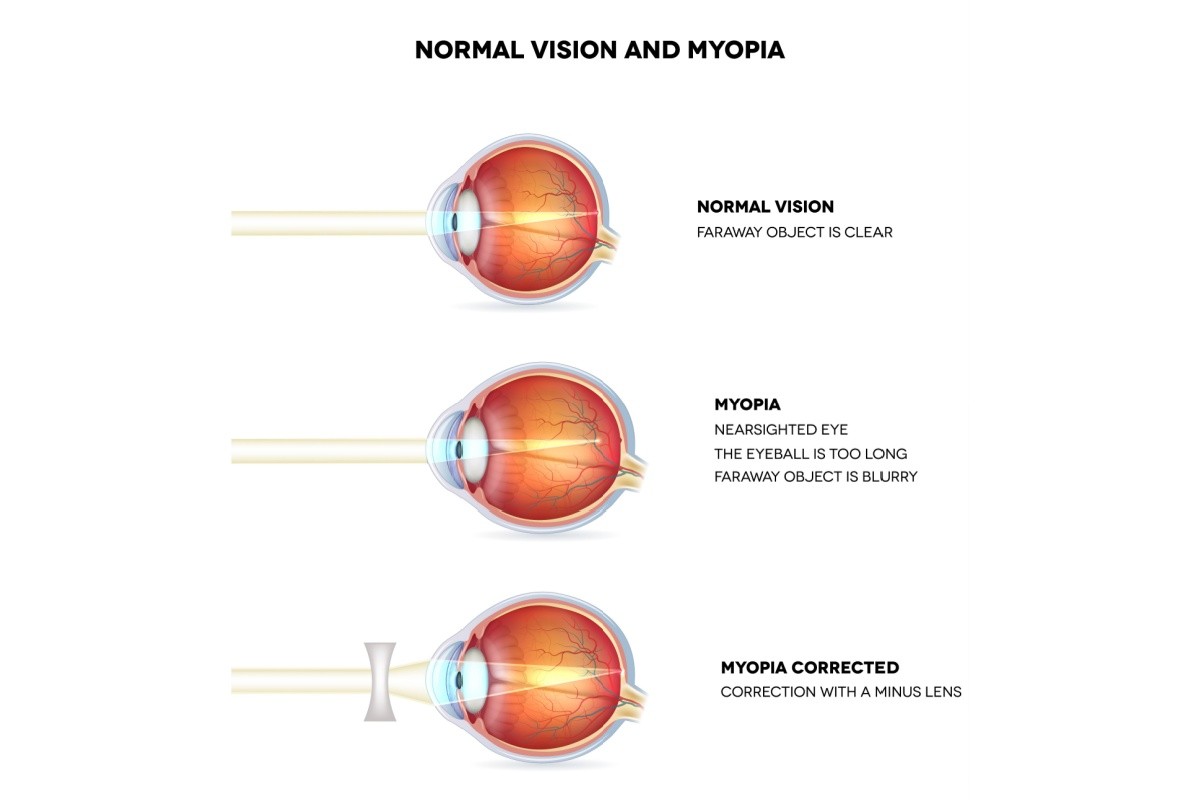
Nearsightedness (myopia) develops when your eyeball grows too long or your cornea curves too steeply, causing light to focus in front of your retina instead of directly on it, making distant objects appear blurry.
Once your eyes reach this elongated shape, they remain there. Think of it like your height — once you finish growing, your bones don’t shrink back down. The same principle applies to the structure of your myopic eye. Your prescription may require minor adjustments over time, but the underlying nearsightedness remains.
Myopia can be managed however. Myopia management is a comprehensive approach to eye care that uses specialized treatments—such as custom contact lenses, medicated eye drops, or specific glasses—to slow down the physical elongation of the eye and reduce the progression of nearsightedness in children.
Regular comprehensive eye exams help track these gradual changes and keep your vision sharp.
Age-Related Vision Changes & Myopia
How Presbyopia Affects Nearsighted Vision
Around age 40, you’ll start noticing something interesting happens to your near vision. The lens inside your eye becomes less flexible, making it harder to focus on close objects like your phone or a restaurant menu.
This condition, called presbyopia, affects everyone regardless of whether they’re nearsighted. If you have myopia, you might find yourself taking off your distance glasses to read—but this doesn’t mean your nearsightedness is improving.
You’re simply using your myopic eye’s natural focus point for reading. Your distance vision still requires correction, and you now need help with close-up tasks as well.
Cataract Development & Vision Changes
Cataracts can temporarily change how your eye focuses light, sometimes making distant objects appear clearer than they have in years. This occurs because the clouding lens alters how light bends as it enters your eye.
Some people with cataracts notice their distance vision seems better, leading them to believe their myopia is improving. However, this change comes at the cost of overall vision quality — colours appear duller, night vision worsens, and glare becomes problematic.
Cataract treatment can restore clear vision through surgery, but you’ll likely need glasses again afterward since the underlying eye shape hasn’t changed.
Myopia Control & Management Options in Langley
While you can’t reverse existing myopia, you can take steps to prevent it from worsening. Myopia control treatments work particularly well for children and teenagers whose eyes are still developing.
Specialty contact lenses, including multifocal designs, (and specialty glasses)can slow myopia progression by altering how light focuses across the retina. Orthokeratology lenses, worn overnight, gently reshape your cornea, giving you clear vision during the day without glasses.
Contact lens fitting services can determine which options work for your specific needs. These treatments require precise measurements and ongoing monitoring to maintain their effectiveness.
When to Schedule Your Eye Exam
Annual Check-ups for Myopia Monitoring
Your prescription can shift gradually over time, even in adulthood. Annual exams help catch these changes before they significantly impact your daily activities.
During your visit, the eye doctor checks for complications that can accompany myopia, such as retinal detachment or glaucoma. Higher degrees of nearsightedness increase your risk for these conditions.
Glaucoma screening appointments can detect early signs of this condition, which often develops without symptoms until significant vision loss occurs.
Signs Your Vision Needs Attention
You might need an updated prescription if you notice these changes:
- Squinting more than usual
- Headaches from eye strain
- Difficulty seeing distant objects clearly
Digital eye strain has become more common as screen time increases. The eye doctor can recommend specific lens coatings or computer glasses to reduce fatigue.
Professional Care at Willoughby Doctors of Optometry
Managing myopia throughout your life requires regular professional monitoring and appropriate vision correction. The team at this Langley practice uses diagnostic technology to track changes in your prescription and overall eye health.
Our clinic offers comprehensive myopia management services, from children’s eye care Langley families trust to adult monitoring appointments. Contact lens fitting services can help you find comfortable options, whether you need myopia control lenses or standard correction.
If you’re concerned about changes in your nearsighted vision or want to explore myopia control options, schedule an appointment with Willoughby Doctors of Optometry. The team can assess your current vision needs and recommend the right approach for maintaining clear, comfortable sight as you age.