

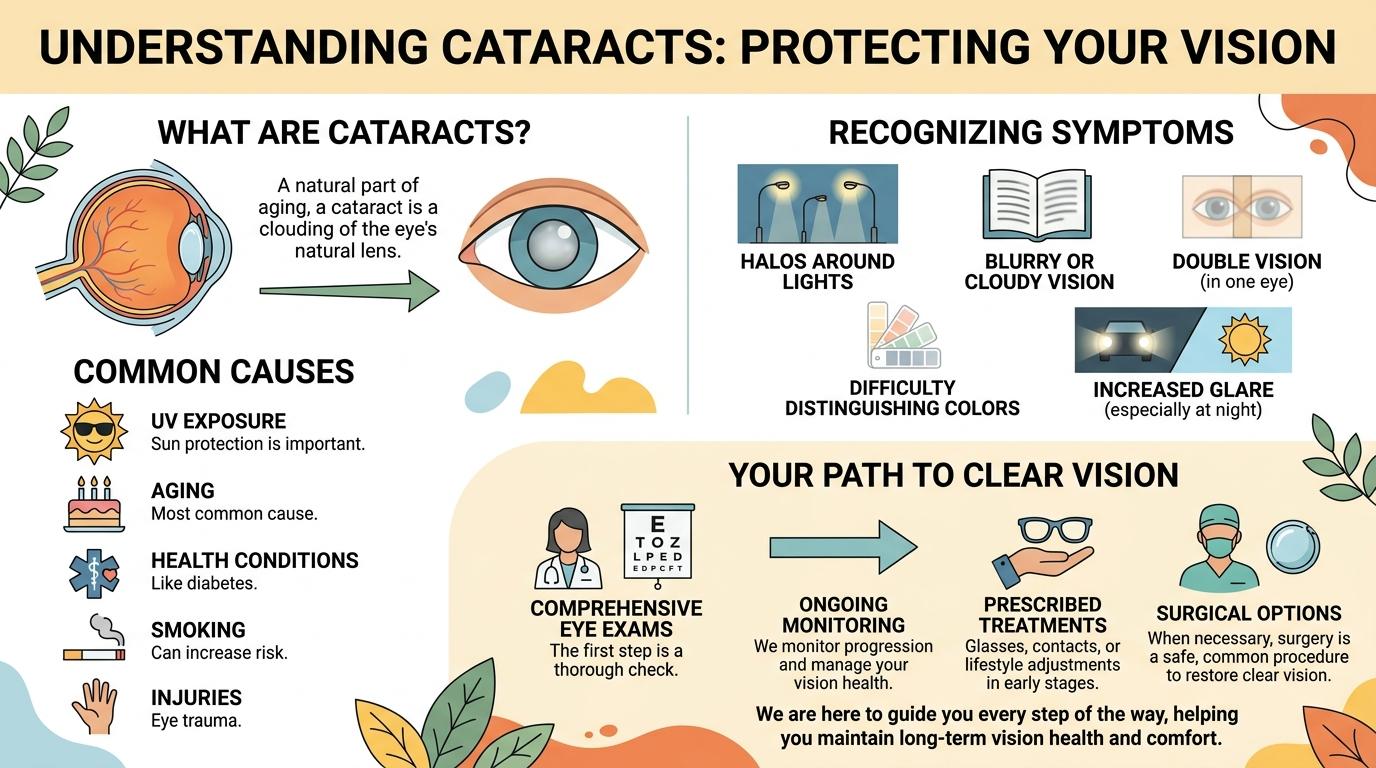
It’s easy to write off subtle blurriness as tiredness or poor lighting, but it’s often an early sign of cataracts. The first sign of cataracts is typically a gradual blurring or cloudiness in your vision that feels like looking through a fogged-up window. This change usually happens slowly over months or years, which is why many people don’t notice it right away.
Monitor these subtle changes and book a comprehensive eye exam to identify the issue before it starts to impact your daily life.
Early Symptoms Worth Paying Attention To
One of the earliest signs many people notice involves light. You may find that certain environments or times of day become more challenging than they used to be. Watch for these symptoms:
- Halos or starburst effects around streetlights or headlights at night.
- Sunlight or oncoming car lights feel much harsher or more glaring than before.
- Night driving feels more tiring or uncomfortable.
Other Early Warning Signs
Beyond light sensitivity, cataracts can affect how you see colour and detail. These changes can be so slow that you might not realize they’re happening until you stop to compare your current vision to the past:
- Look for colours that appear faded, yellowed, or washed out.
- Notice if you need brighter lamps for reading or other close-up tasks.
- Monitor how often you need a new glasses prescription. If your current lenses no longer feel effective shortly after an update, it may indicate changes in the lens of your eye.
A proper eye exam can help figure out what’s really going on.
What Stage 1 Cataracts Actually Look Like
Here’s the tricky part about early cataracts. At stage 1, the cloudiness in your eye’s lens is tiny, and you likely won’t see any physical change when you look in a mirror. There’s no visible white or milky film at this stage, which makes it easy to assume everything is fine.
That’s exactly why an eye exam matters so much. The changes happening inside the lens are often too subtle to catch on your own. Eye exams give your optometrist a clear look at what’s developing before your vision is significantly affected. Early detection means more options and more time to plan.
What Can Be Mistaken for Cataracts
Not every vision change points to cataracts. Glaucoma, for example, shares some of the same risk factors and can also affect how clearly you see. The difference is where the problem happens. Cataracts cloud the lens of the eye, while glaucoma affects the optic nerve. However, both are serious, and both deserve attention.
This overlap is exactly why trying to self-diagnose based on symptoms alone isn’t reliable. What feels like one condition could be another, or in some cases, both can be present at the same time. An optometrist has the tools and training to look beyond what you can feel or describe.
With the right diagnostic equipment, an optometrist can see the lens clearly, assess the optic nerve, and distinguish between conditions that might otherwise appear the same from the outside. Tools like optical coherence tomography give doctors a detailed view of the eye’s internal structures that simply isn’t possible any other way.
Getting that clarity early can make a real difference in how your vision is managed going forward. Regular cataract management helps address changes before they noticeably affect your daily life. In these early stages, it may be as simple as keeping your prescription up to date.
When to Book an Eye Exam
If your vision is making it harder to read, drive, or get through your day comfortably, that’s a good reason to book an appointment. It’s also worth paying attention if a new prescription doesn’t seem to help the way it should. These are signals your eyes may be sending that deserve a closer look. You don’t need to wait until symptoms feel significant.
For most adults, an eye exam every 1–2 years is a solid routine. Once you’re past 50, or if you have a condition like diabetes, annual exams become even more helpful for staying ahead of changes. These appointments help establish a baseline so any changes in your vision are easier to identify over time.
Keep Your Future in Clear Focus
Taking care of your sight starts with paying attention to the small things. If you’ve noticed any blurring, trouble with night driving, or a sudden need for more light, act now to protect your vision. Reach out to our team to get the clarity you need and help your eyes stay healthy for years to come.
Schedule your next eye exam at Willoughby Doctors of Optometry today!