
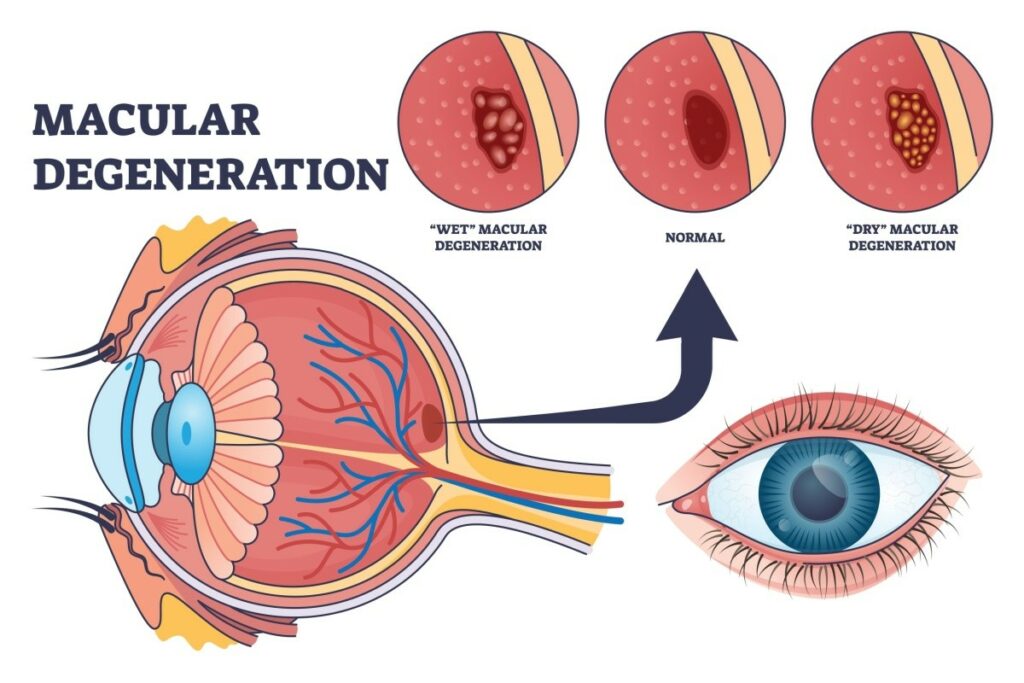
When you think about your vision changing as you age, you might expect to need reading glasses or to have trouble seeing at night. But age-related macular degeneration affects something different—the sharp, central vision you use to read, drive, and recognize faces.
The main difference between wet and dry age-related macular degeneration lies in how quickly they progress and their severity: dry AMD develops slowly over years through gradual cell breakdown, while wet AMD advances rapidly when abnormal blood vessels leak fluid under your retina. Willoughby Doctors of Optometry helps patients understand these differences and provides comprehensive eye exams in Langley, BC, to protect your vision.
What Age-Related Macular Degeneration Does to Your Vision
Age-related macular degeneration (AMD) targets the macula, a small area in your retina responsible for sharp central vision. When this area gets damaged, you can still see around the edges of your vision, but the center becomes problematic.
You might first notice that reading becomes harder, even with your regular glasses. Tasks like threading a needle or seeing details on faces become frustrating. Regular comprehensive eye exams can detect these changes before symptoms appear.
- Central vision becomes blurry or distorted
- Straight lines appear wavy or bent
- Dark spots develop in central sight
Dry Macular Degeneration: The More Common Type
About 90% of people with macular degeneration have the dry form. Dry AMD progresses slowly, which gives you time to adapt and seek treatment before significant vision loss occurs.
How Dry AMD Develops in Your Eyes
Think of dry AMD like wallpaper slowly peeling away. The light-sensing cells in your macula gradually stop working properly over months and years.
Yellow deposits called drusen start forming under your retina, like dust collecting on a shelf. These deposits interfere with how your retina processes light and sends signals to your brain.
- Light-sensing cells slowly break down over time
- Yellow deposits called drusen form under the retina
- Vision loss happens gradually over the years
Signs You Might Notice with Dry AMD
The changes with dry AMD happen so slowly that you might not realize anything is wrong at first. You might think you just need stronger reading glasses or better lighting.
Many people first notice problems when they try to read restaurant menus in dim lighting or can’t make out their grandchildren’s faces across the room clearly. Studies show AMD affects Canadian seniors at increasing rates.
- Need brighter light for reading tasks
- Difficulty recognizing faces from a distance
- Colours appear less vibrant than before
Wet Macular Degeneration: The More Serious Form
Wet AMD accounts for only 10% of macular degeneration cases, but it causes most of the severe vision loss from this condition. Wet AMD can change your vision dramatically within weeks or months.
What Happens Inside Your Eye with Wet AMD
Imagine your garden hose developing tiny holes that spray water everywhere, rather than directing it where you need it. That’s similar to what happens with wet AMD.
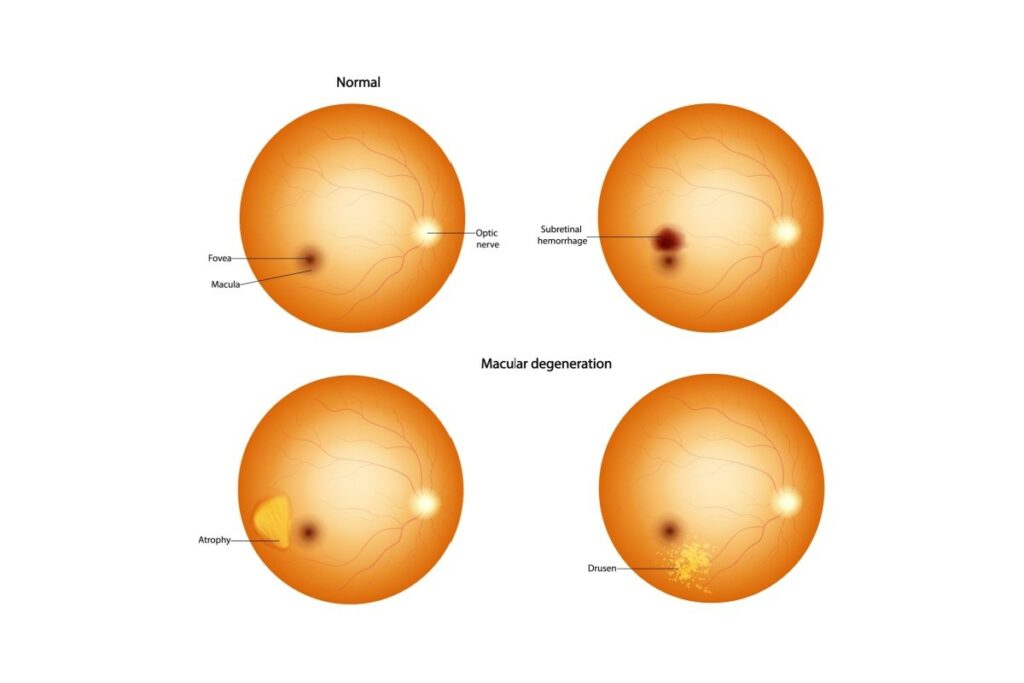
New blood vessels grow where they shouldn’t be and leak fluid or blood under your retina. This fluid buildup can quickly distort your central vision and cause permanent damage if not treated promptly. Retinal imaging helps detect these changes early.
- Abnormal blood vessels grow under the retina
- These vessels leak fluid or blood
- Vision changes occur much more rapidly
Warning Signs That Need Immediate Attention
With wet AMD, you may notice signs like:
- Sudden increase in vision distortion
- Dark or blank spots in central vision
- Straight lines look very wavy or crooked
These sudden changes need quick evaluation.
Key Differences Between Wet & Dry Types
These differences help you know what to expect and when to seek help. Dry AMD gives you time to plan and adapt, while wet AMD requires immediate action.
Treatment approaches also differ significantly. Dry AMD management focuses on slowing progression through nutrition and lifestyle changes, while wet AMD often requires injections or laser treatments to stop the abnormal blood vessel growth. Dilated eye exams help doctors examine your retina thoroughly for both types.
- Dry progresses slowly while wet moves quickly
- Wet form causes more severe vision loss
- Treatment options vary significantly between the 2 types
How Eye Exams Catch AMD Early in Langley BC
Regular comprehensive eye exams can detect macular degeneration before you notice any symptoms. Early detection gives you more options for preserving your vision.
Tests That Detect Macular Degeneration
During your eye exam, the optometrist looks inside your eyes with special instruments to check your retina’s health. These tests are comfortable and provide detailed information about any changes happening in your macula.
OCT scanning creates detailed cross-sectional images of your retina layers, helping detect fluid buildup or tissue changes that indicate AMD development.
- Dilated retinal examination with imaging technology
- Amsler grid test for central vision distortion
- Optical coherence tomography for detailed retinal pictures
Why Regular Monitoring Protects Your Sight
Even if you have dry AMD, it can sometimes change to the wet form. Regular monitoring helps catch this progression early when treatments work most effectively.
Your eye care team can also recommend specific vitamins, dietary changes, and lifestyle modifications that may help slow the progression of macular degeneration.
- Early detection allows for prompt treatment options
- Dry AMD can progress to the wet form
- Lifestyle changes may slow disease progression
Seek Treatment for AMD with Us
If you’re concerned about changes in your central vision or you’re over 50 and haven’t had a recent comprehensive eye exam, contact Willoughby Doctors of Optometry in Langley. The team uses diagnostic technology to detect macular degeneration early and help you maintain your vision health for years to come.