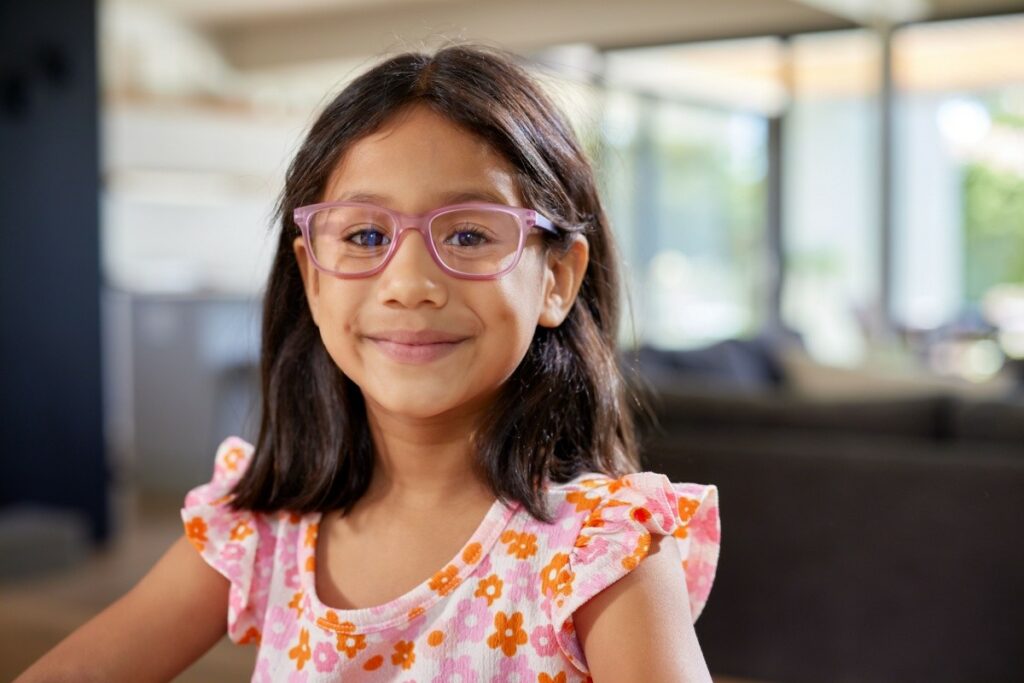
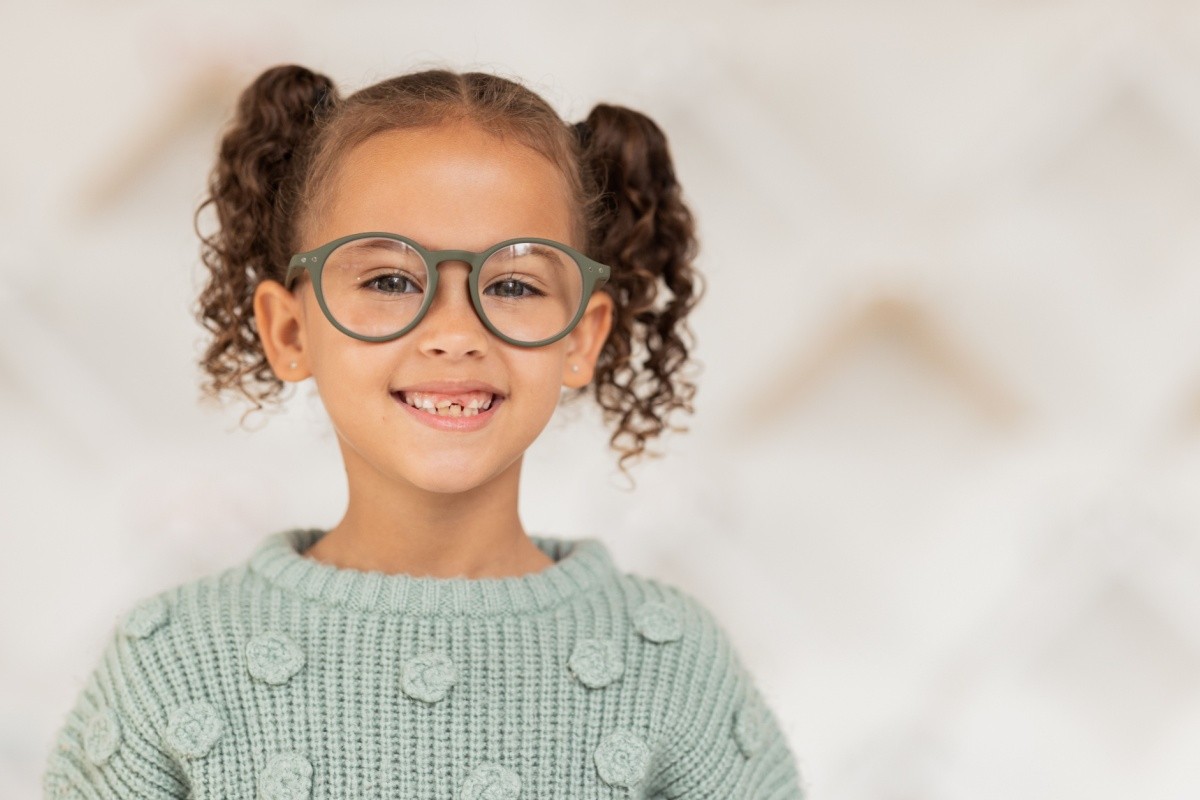
You watch your child adjust their glasses for the hundredth time since they woke up, and you wonder if those little frames will be a permanent part of their life.
Some children can outgrow certain vision conditions, but it depends on their situation and how their eyes develop over time. Each child’s eyes develop differently, and some conditions may improve, while others may worsen without proper care.
At Willoughby Doctors of Optometry, we help families understand these changes through comprehensive monitoring and personalized eye exams that track your child’s vision development.
What Happens to Children’s Vision as They Grow
How Eyes Develop During Childhood
Your child’s eyes continue growing and changing from birth through their teenage years. The eyeball itself grows longer and wider, while the focusing muscles strengthen and coordination between both eyes improves.
The most dramatic changes happen during the first few years of life. Your baby’s eyes start out shorter than adult eyes, which is why many infants are naturally farsighted. As the eye grows longer, this farsightedness often decreases naturally.
When Vision Changes Are Normal
You might notice your child’s vision seems different during growth spurts. These rapid physical changes can temporarily affect how well your child sees, especially during the school-age years, when bodies grow quickly.
Small prescription changes are completely normal as your child develops. Your eye doctor tracks these changes during regular eye exams to determine if your child needs a new prescription or if their current glasses still work well. Comprehensive eye exams help detect changes early when treatment options are most effective.
Vision Conditions That May Improve Over Time
Nearsightedness in Young Children
Very young children with mild nearsightedness sometimes see improvement as their eyes finish developing. This tends to happen when their myopia is related to temporary focusing problems rather than to the eyeball being too long.
However, most cases of childhood nearsightedness actually get worse over time, especially during school years. Myopia control treatments help slow this progression, giving your child the best chance for stable vision as they grow. Managing childhood myopia requires understanding risk factors and treatment options.
Farsightedness & Natural Correction
Many children are born farsighted because their eyes are naturally shorter when young. As your child’s eyes grow longer during normal development, this farsightedness often decreases on its own.
Mild farsightedness in preschoolers frequently improves enough that glasses become unnecessary by elementary school. Your child’s eye doctor can monitor this natural progression.
Astigmatism Changes
Slight astigmatism in young children may lessen as the shape of their cornea stabilizes with age. Small amounts of astigmatism that cause minimal vision problems sometimes become less noticeable as your child’s visual system matures.
Moderate to severe astigmatism typically doesn’t disappear completely, but your child’s prescription may become more stable as they reach their teenage years. Understanding astigmatism helps parents know what to expect as their child grows.
Conditions That Typically Don’t Go Away
Progressive Myopia
Most children who develop nearsightedness after age 6 will need stronger prescriptions over time. Progressive myopia often continues through the school years and may not stabilize until early adulthood.
Your child’s prescription might change every year or two as their eyes continue growing longer. Early intervention with myopia control treatments can help slow this progression significantly. Understanding myopia progression shows why early management matters for your child’s long-term vision health.
Lazy Eye & Other Developmental Issues
Amblyopia, or lazy eye, requires active treatment during childhood when the visual system is still developing. Without proper intervention, this condition doesn’t improve on its own and may lead to permanent vision problems.
Crossed eyes, eye muscle coordination problems, and other structural issues typically need ongoing management throughout childhood. Early children’s eye care makes a significant difference for treatment.
Early amblyopia treatment gives children the opportunity for normal vision development.
How to Know if Your Child Still Needs Glasses
Regular Eye Exams
Comprehensive eye exams track how your child’s vision changes over time and determine if their current prescription still meets their needs. Your eye doctor can detect small changes in vision that your child might not notice or mention.
These regular checkups also catch developing problems early, when treatment is most effective. Some vision conditions don’t cause obvious symptoms but still need attention to prevent future complications.
What Happens During Children’s Vision Testing
Eye doctors use age-appropriate testing methods that make the exam comfortable and engaging for your child. Younger children might look at pictures or shapes instead of letters, while older kids can participate in more detailed testing.
These examinations include checking how well each eye sees, how both eyes work together, and the overall health of your child’s eyes. This comprehensive approach helps determine if glasses are still necessary or if the prescription needs adjustment.
Support Your Child’s Eye Health as They Grow
Proper Eyewear for Active Kids
As your child grows more active in sports and outdoor activities, their eyewear needs may change. Sports safety eyewear options protect your child’s eyes during athletics while providing clear vision.
Older children and teenagers might prefer contact lenses for activities where glasses feel cumbersome. Contact lenses can provide freedom for sports, swimming, and social activities while maintaining clear vision. Contact lens safety guidelines help ensure proper care and use.
Protect Eyes from Screen Time
- Take regular breaks from screens using the 20-20-20 rule: every 20 minutes, look at something 20 feet away for 20 seconds
- Ensure proper lighting when using devices to reduce eye strain
- Position screens at arm’s length and slightly below eye level
- Consider digital eye strain treatment options if your child experiences frequent discomfort
UV Protection for Young Eyes
Children’s developing eyes are sensitive to UV damage, making sun protection crucial from an early age. Quality sunglasses with UV protection help prevent both immediate discomfort as well as long-term eye health problems.
Encourage your child to wear sunglasses during outdoor activities, especially around water, sand, or snow, as all of these surfaces reflect UV rays. By doing so, you protect your child’s vision and help prevent cataracts and other UV-related conditions later in life.
Protect Your Child’s Eyes
Whether or not your child outgrows their glasses depends on the vision condition they have and how their eyes develop over time. Regular eye exams help track these changes and ensure your child gets the vision care they need at each stage of their growth.
Our team at Willoughby Doctors of Optometry provides comprehensive children’s eye care in a comfortable, welcoming environment that makes each visit a positive experience for your family. Schedule your child’s eye exam today to monitor their vision development and discuss their long-term eye health needs.